Emergency coronary intervention
Emergency coronary intervention
What it is
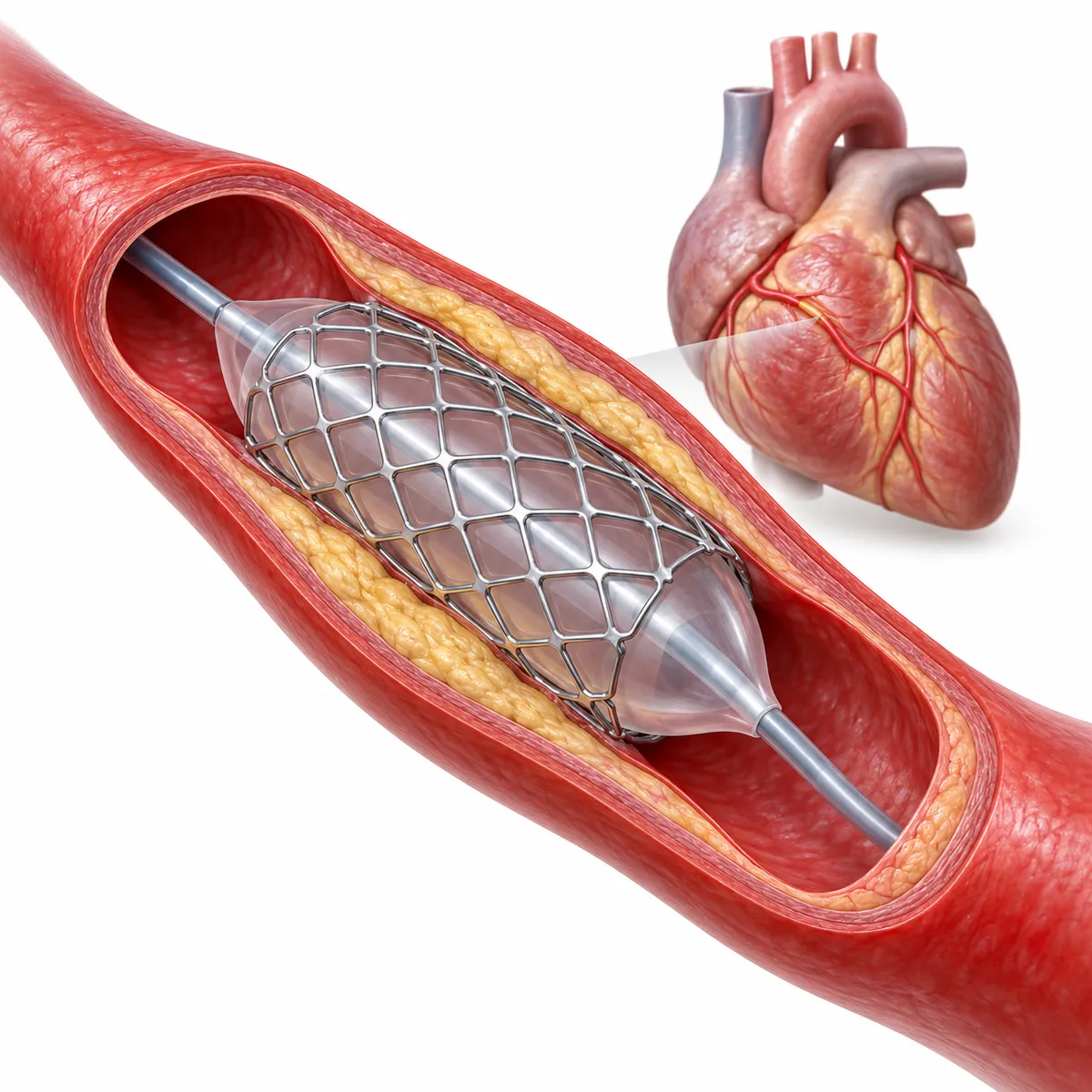
In acute ST-elevation myocardial infarction, the blocked coronary artery is urgently opened with a balloon and stent in the catheterisation laboratory. Time is critical: the sooner the vessel is opened, the less the heart muscle is damaged. After the intervention the patient is monitored under intensive care.
Why it is done
The goal is to mechanically open a fully blocked vessel during a heart attack and protect the heart muscle. In suitable cases this method can be more effective than medication (thrombolysis) because it opens the vessel directly; the choice is made by the physician based on the patient's condition and the time factor.
How it is performed
The patient is admitted as an emergency, with an ECG and blood tests (troponin) done immediately. When indicated, they are taken without delay to the catheterization laboratory; coronary angiography identifies the blockage, and that segment is opened with a balloon and stent. All steps are organized as fast as possible.
Who it may be recommended for
This is not planned but an emergency intervention. It may apply to patients with signs of an acute heart attack — severe chest pain lasting more than 20 minutes, cold sweat, shortness of breath, pain radiating to the arm or jaw.
Preparation
Because it is an emergency, the opportunity for advance preparation is limited and the intervention is performed immediately. Information about contrast allergy, current medications and previous conditions is gathered as quickly as possible.
After the procedure / Recovery
After the intervention the patient is monitored in intensive care. Antiplatelet and other medications may be prescribed, and cardiac rehabilitation later on. The medication regimen, activity level and follow-up examinations are defined individually by the physician.
Risks
As with any invasive intervention, there are risks of bleeding, vessel injury and rhythm disturbances. However, delaying intervention during an acute heart attack carries a greater risk. The benefit-risk balance is assessed for each patient individually by the physician.
Note: for chest pain lasting more than 20 minutes or suspected heart attack, do not wait — call 103 immediately.